Keep It or Swap It? Your Coffee Filter Guide
Keep It or Swap It? Your Quick Guide
You want good coffee. You want a simple choice. You face two paths: REUSABLE filters or paper replacements. Each has clear gains and clear trade-offs. This piece will show you both.
You will learn the filter types. You will learn care and cost. You will learn how grind, dose, and brew change with each. Read on to match your taste, time, and waste goals.
Decide what fits your cup and life today.


You’ve Been Using Coffee Filters All Wrong—Find Out How to Get Better Flavor
Reusable vs Paper: What You Gain and What You Lose
What reusable filters give you
Reusable filters let oils through. That brings fuller body. You taste more of the beans. You save money over months. You cut waste. Bring a metal basket and you brew in the office or on a trip with no paper to buy. A metal cone like the Able Kone keeps its shape. A cloth sock adds softness and keeps acidity in check.
Quick real-world test. You swap a paper for a metal. The cup feels heavier. The aroma is stronger. Some grounds slip through. You’ll get a bit of grit with some methods.
What paper filters give you
Paper traps oils and fines. The cup stays clean. The taste is brighter and clearer. Cleanup takes seconds. You fold and toss. A Chemex or Melitta paper makes a very clean cup. Papers break down after use. They add recurring cost and waste. They are light on upkeep. They are easy to use for guests.
Trade-offs to weigh
Practical tips you can use now
Simple questions to ask before you choose
Answer these and you’ll know the right swap for your routine.
The Filter Types: Mesh, Metal, Cloth, and More
Metal: stainless mesh and laser-cut plates
Metal filters pass oils. They give a full body. They last for years. You will see brands like Able Kone or the Espro metal filter. They can clog with fines. You must rinse and brush them after each use.
Mesh baskets and fine plates
Mesh traps some fines but not all. Laser-cut plates hold shape and flow better. They work in both cones and flat-bottom brewers. Expect tiny sediment if your grind is too fine.
Cloth: cotton, hemp, and cloth socks
Cloth gives a clean cup with soft texture. It filters fine and keeps crema-like oils in balance. It needs care. You must rinse, dry, and boil or blanch to remove oils and smells.
Silicone and plastic hybrids
These aim to be easy. They bend, pop, and last. They can trap oils and leave a heavier cup than paper. They handle travel and campers well.
Next, you’ll learn how to pick the right replacement paper filter for your brewer.
Picking the Right Replacement Paper Filter
Shape and size
Look at the brewer. Is it a cone or a basket? Match the shape. Cone filters like Hario V60 come in sizes 01, 02, 03. Melitta and many drip machines use basket sizes #2 or #4. Chemex uses thick square filters made for that carafe. Pick the exact model or size printed on your brewer.
Fold pattern and fit
Some papers fold into a cone. Others sit flat with a wave edge (Kalita Wave). The fold changes the flow. A bad fit slows drip. A loose fit lets grounds ride the sides. Buy the fold your brewer expects.
Porosity and paper weight
Thicker paper traps more oils and fines. Chemex-style papers give a bright, clean cup. Thin papers drain faster and leave more body. If you want clarity, choose heavier, bonded filters. If you want more heft, pick lighter stock.
Bleached vs unbleached
Bleached paper is white. It is safe. Rinse it and it will taste neutral. Unbleached is brown and less processed. It can feel more natural. Neither is clearly better. It is your taste and ethics.
Reading the package
Look for model fit notes: “fits Hario 02,” “Melitta #4,” or “8–12 cup.” Some packs list grams or flow rate hints. Brands like Hario, Chemex, Kalita, and Melitta print clear models. Use them.
Storage and when to change
Keep filters dry and sealed. Store away from oils and smells. Toss if you smell must or see discoloration. Replace brands when the cup changes without other causes. Try a new paper after 20–40 brews if taste drifts.
Quick buying checklist
Next, you will learn how to care for filters and keep reusable options performing at their best.
Care and Upkeep: Keep Reusable Filters Long-Lasting
Rinse and reset after every brew
Rinse your filter right after brewing. Tap the grounds into compost or trash. Run hot water through the filter until the water runs clear. This stops oils from setting. For metal mesh, run a small brush across the weave. A stiff toothbrush works well. Do this every day.
Weekly quick clean
Do a short, stronger clean once a week. This keeps oils from building.

Monthly deep clean or after heavy use
Soak your filter every month or after about 100 brews.
Avoid bleach and strong cleaners. They leave tastes and can damage the mesh or cloth.
Cloth check and retirement rules
Inspect cloth filters after cleaning. Look for holes, frays, or dark spots that do not rinse out. Replace cloth when threads pull or flow changes. Expect a cloth to last months. A metal filter can last years. Retire metal if it warps, rusts, or holds a grease smell after deep cleaning.
Drying and storage
Dry metal and cloth fully before you store them. Hang cloth filters to air dry. Lay metal flat or stand it to drain. Store paper filters dry and sealed. If you store a damp filter, mold will grow fast. Keep filters away from strong kitchen smells.
Dialing in Taste: Grind, Dose, and Brew with Filters
Grind and dose targets
You want simple starting points. Use these as your baseline and tweak from there.
If you use a burr grinder like a Baratza Encore or a compact blade like the BLACK+DECKER One-Touch Coffee Grinder, Compact 2/3 Cup, aim for consistency. One small step on a burr grinder can change the cup.

Taste signals and fixes
Taste tells you what to change.
Make one change at a time. Test. Note the result.
Water temp and pour style
Use 90–96°C (195–205°F) as a rule. Metal filters extract faster. Try the cooler end (90°C) or shorter contact time with metal. Cloth holds oils. Use steady, gentle pours. Paper gives clarity. You can go hotter and pour slower for more body and brightness.
Three quick tests (three brews)
Run these back to back.
Taste them side by side. Write notes. Small changes will point you to the right balance.
Cost, Waste, and Practical Tips to Decide
Quick math: cost per cup
You count dollars. You count cups. A stainless cone runs $15–30. Cloth or basket filters sit around $10–20. Paper filters cost $0.03–$0.12 each. Use $0.05 as a simple number.
If a reusable costs $20 and it saves $0.04 per cup, break-even is 500 cups. That is about 1.4 years at one cup a day. Brew two cups a day and you hit it in 8 months. Brew four cups a day and you break even in 4 months.
Waste and disposal
Paper plus grounds compost well. Brown, unbleached filters pose no problem. Bleached filters also break down, but check your local compost rules. Metal filters last years and cut solid waste. Cloth filters need washing. Old cloth can be repurposed as rags. Recycle metal when it’s done.
Lifestyle notes: travel, speed, storage
You travel light. Paper packs flat. You can stash 20 filters in a pocket. Reusables add weight and need drying space. Metal drains fast. Cloth holds moisture. If you rush in the morning, paper saves time. If you savor ritual and cleanup, reusable pays off.
Practical tips
Use these rules of thumb with your cup count and habits. With that clear, you can move on to the final wrap-up.
Choose, Care, and Brew Better
You now have the facts. You can pick the filter that fits your taste and life. Buy the right paper. Care for reusables. Make one small change. Grind finer or coarser. Change dose or time. Taste the cup. Keep what works. Swap what does not.
Trust your palate. Brew with care. Enjoy the ritual. Repeat. Share the cup. Teach a friend. Note results. Adjust and try again. Small steps make big gains in taste. today.
 Previous Post
 Next Post
I did the math on waste: if you use 200-Count Basket Coffee Filters for 8–12 Cups and brew one pot daily, the landfill pile adds up. Switched to Reusable GoldTone and feel smug. But yeah, cleaning is a PITA. 😅
Smugness is an acceptable side effect of sustainability, Leo. If cleaning is the barrier, try the Set of 2 #4 Cone Reusable Coffee Filters — easier cleanup for some brewers and still reduces paper use.
I love my 4-Inch Cotton Coffee Strainer with Wood Handle for slow mornings. It’s delicate and gives a softer cup. A couple of notes:
– Soak & rinse thoroughly after each use
– Dry in sunlight if possible
– Rotate with a paper filter when guests complain about sediment
Works great for pour-over and cold brew. Durability has been fine for me so far.
Do you notice much sediment with the cloth? I’m worried about sludgy cups.
Thanks for sharing your routine, Nora — that’s exactly the mixed approach the article suggests: combine cloth for ritual brews and paper for easier cleanup with guests.
Question for the community: when dialing in taste with filters, how big a difference does the grinder make vs the filter type? I have a BLACK+DECKER One-Touch Coffee Grinder and I’m trying to improve extraction without buying new equipment.
My experience: grind consistency matters more than I thought. Even with paper filters, uneven grind = bitter pockets. Any dosing tips?
Great question. Grinder quality usually has a bigger impact on extraction consistency than small differences in filter type. For dosing: start with a 1:15 ratio (coffee:water) by weight, adjust +/- by 0.5–1g per 100ml to taste. For the BLACK+DECKER grinder, do small pulses and weigh your doses to reduce variability.
Hannah — agree on 1:15 to start. Also try a finer grind in 1-step increments and taste each change, keep everything else constant.
If your grinder is inconsistent, try shaking the grounds gently to separate fines before brewing — weird hack but sometimes helps.
Numbers-crunching time: switching to reusable filters saved me maybe $30 over 6 months. Not a fortune, but the reduced trash is nice.
Curious about longevity — anyone have multi-year experience with the Cuisinart Gold-Tone Permanent Filter for 10–12 Cups?
Some users report 2+ years with proper care for the Cuisinart Gold-Tone. Regular rinse, monthly deep-clean, and avoiding dishwasher cycles that are too harsh extend life. If you see bent mesh or persistent staining, it’s probably time to replace.
I switch between the Set of 2 #4 Cone Reusable Coffee Filters and the 200 Natural Unbleached Basket Coffee Filters based on guests. When friends come over I use unbleached paper — easier cleanup and nobody complains. For solo mornings I use the metal cone.
A couple of practical notes:
– Use the BLACK+DECKER One-Touch Coffee Grinder for small batches; it gets inconsistent if you try to grind too much at once.
– Cloth needs gentle soap and sun-dry to avoid odor.
Overall: taste tradeoffs are real but manageable.
Do you find the cone reusable filters clog more than basket ones? I tried a cone once and felt like it slowed the brew too much.
Agreed with Priya — cone filters are forgiving once you tweak grind and pulse pour technique. Also easier to rinse clean than some mesh filters.
Worth noting: cone filters concentrate flow through a narrower point, so grind and dose adjustments are more critical than with baskets.
Ethan — they can clog if the grind is too fine or the dose is high. I usually go slightly coarser for cones and it flows nicely.
Great real-world approach, Priya. The grinder tip is useful — small batches tend to produce a more uniform grind in compact grinders like the BLACK+DECKER unit.
Real talk: I mostly use the cheap 200-Count Basket Coffee Filters for 8–12 Cups because I’m lazy and hate cleaning things. 😂
That said, when I do use the Reusable GoldTone it’s a nicer cup. But cleaning takes time. Trade-offs.
Totally fair — convenience matters. Paper filters are a valid choice and reduce upfront hassle. If you ever want a middle ground, the Set of 2 #4 Cone Reusable Filters are pretty low-maintenance compared to cloth.
Same here, Marcus. Paper for weekdays, reusable for weekends when I feel fancy.
Quick thought: does anyone notice a big taste difference between the Cuisinart Gold-Tone Permanent Filter for 10–12 Cups and cheaper mesh ones? I care about clarity more than body, so I’m leaning paper.
Okay, long post because I actually tested a few combos last weekend:
1) 200-Count Basket Coffee Filters for 8–12 Cups + medium grind = clean, consistent.
2) Reusable GoldTone Basket + medium-coarse = fuller, a bit oily.
3) 4-Inch Cotton Coffee Strainer with Wood Handle = surprisingly nice for cold-brew steeping, but tricky for everyday drip.
If you want low fuss, paper filters win. If you want to experiment and cut waste, go reusable — but commit to cleaning. Typos and thoughts: do NOT forget to dry cotton filters fully or they get funky. 😬
Tried the Reusable GoldTone Basket Coffee Filter for 8–12 Cups last month and I’m pretty impressed. Cleaner taste than I expected, and I like not buying paper every week. That said, the metal trap holds oils — my pour-over tasted a bit heavier until I adjusted the grind finer.
Pros: saves $$$ and waste. Cons: needs regular deep cleaning (baking soda + vinegar saved mine). Would recommend if you brew daily.
I had the same experience! Also swapped between the 200 Natural Unbleached Basket Coffee Filters and the GoldTone depending on mood — paper = cleaner cup, metal = fuller body. No judgment, both have their place 🙂
Glad it worked for you, Daniel — great tip about grinding finer to reduce over-extraction with metal. For cleaning, soaking in hot water and a little Oxy-type powder every few weeks keeps the GoldTone looking new.
How long did it take you to stop getting a metallic aftertaste? Mine tasted kinda… off for a few brews and I freaked. 😅
Care tip from someone who burned through a few: when you buy cloth or cotton filters (like the 4-Inch Cotton Coffee Strainer with Wood Handle), always pre-wash and boil once before first use. It removes fibers and any odd smell. Then, after each brew, squeeze out excess water and hang to dry.
Also, rotate between 2-3 cloth filters so each gets full drying time — mold is the enemy!
Boil + sun-dry = chef’s kiss. Works every time.
Also, store cloth filters in a breathable bag, not a sealed plastic container.
Excellent practical advice, Sofia. Pre-washing and rotating is exactly what the ‘Care and Upkeep’ section recommends to prevent odor and prolong life.
Good tip — I ruined a cloth filter by forgetting to dry it once. Never again.
Big thread incoming — I tested a bunch and here’s my messy notebook style review (tl;dr: grinder matters as much as filter):
– BLACK+DECKER One-Touch Coffee Grinder: solid for quick mornings. Not super uniform for espresso but fine for drip and cone. Clean the chamber often or oils build up.
– 200-Count Basket Coffee Filters vs 200 Natural Unbleached Basket Coffee Filters: I actually prefer unbleached for aroma — less papery. Minor difference but noticeable when you’re picky.
– Reusable GoldTone Basket Coffee Filter for 8–12 Cups: LOVE the sustainability angle. You gotta learn to rinse and deep-clean though.
– 4-Inch Cotton Coffee Strainer with Wood Handle: cute, artisanal vibes. Works great for cold brews or as a makeshift French-press filter, but not ideal for daily drip.
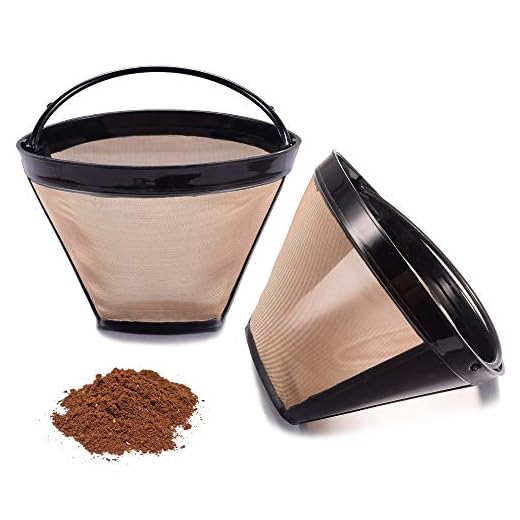
– Set of 2 #4 Cone Reusable Coffee Filters: my go-to when I want a brighter cup without paper.
Questions I had while testing: how often do people really deep-clean brass/metal filters? Every 2 weeks? monthly? Also — anyone tried pairing the cone reusable with a finer grind for a more espresso-like intensity?
Love the notebook style, Olivia — super helpful. Deep-cleaning frequency depends on use: daily rinse, weekly soap/warm water for regular use, and a monthly soak in a descaler or baking soda mix if you brew daily. For occasional brewers, every 2-3 weeks is fine.
Also: if you microwave the coffee filter… just don’t. (Yes, someone did this in my house.)
I deep-clean my metal filters every 10 days. I’m a bit obsessive 😅 but it keeps flavors consistent.
If you want espresso intensity, go finer and use a pressurized/espresso device — cones will clog and over-extract if you try espresso grind. Learned that the hard way.
Thanks everyone! So weekly-ish it is. Also noted on the espresso grind — good tip, Leo.
I agree with admin — monthly soak saved my GoldTone from staining and slow drips. Don’t forget to brush the rim and seams.