Keep Your Tea Hot. Sip Longer
Why a Tea Warmer Matters
You want your tea hot. You want each sip to hold its taste. Cold sips kill the joy. A tea warmer does one job. It keeps heat steady. It stops you from drinking fast just to catch the warmth. That saves flavor and calm. You relax. You sip.
This guide shows how warmers work. It shows how to pick one. It gives clear tips to use and care for it. No fads. No heavy tech. Just smart choices and plain steps. You will learn to keep your cup hot and your ritual slow and easy.



Try This Tea for Weight Loss
How Tea Warmers Work: Simple Heat, Clear Purpose
What each warmer does
A tea warmer does one job. It keeps your cup near the right heat. It does not reheat a cold brew. It slows cooling or holds a set temperature.
A cozy traps heat with fabric or wool. It hugs the pot. It stops drafts. It is quiet and uses no power. It cannot raise temperature. It only slows loss.
A tea light or small flame warms from below. A cast‑iron stand or ceramic warmer spreads that heat. It is gentle. It can keep a pot warm for hours. Watch for soot and uneven heat. It is slow to respond.
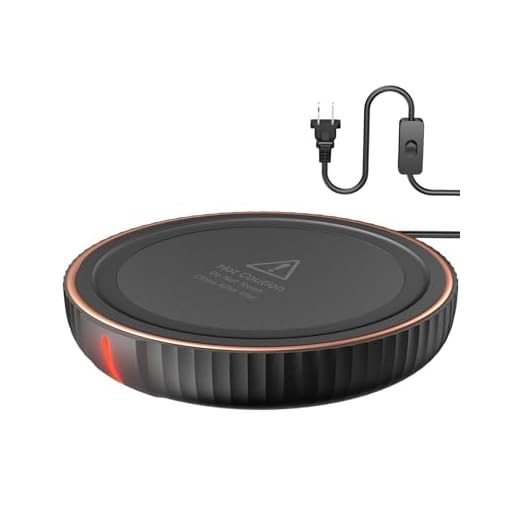
An electric plate gives steady heat. Models like Mr. Coffee and COSORI keep a cup drinkable. They warm the cup base. They are fast and consistent. They use a few watts. Some waste energy if left on all day.
Smart mugs like Ember use internal heaters and a thermostat. They keep a set temp. They act fast. They use more power. They cost more. They bring precision to your ritual.
How the heat reaches the tea
Heat moves from the warmer into the cup. Metal or ceramic conducts heat well. Fabric and insulation slow heat loss. Open cups cool faster. Lidded pots hold heat better. Direct heat can change flavor if it boils or steeps too long. Aim for steady warmth, not boil.
Quick tips
Next, you will learn how to pick the right warmer for your routine.
Types of Warmers and How to Choose One
Candle warmers
You want soft heat and low cost. Pick a candle or lamp warmer if you like gentle, slow warmth and a cozy glow. They fit teapots and mugs with wide bases. They use no cords or heavy power. They can be slow to change temp. If you enjoy ritual, this suits you.
Electric warmers
You want set‑and‑forget heat. Electric plates and mug warmers give steady warmth. Look at models like COSORI or Mr. Coffee for simple plates. For precise temps, consider Ember or a smart mug. Electric units warm fast. They work well at a desk or in the kitchen.
Thermal carafes
You brew once and move. A Zojirushi or Thermos carafe keeps tea hot for hours. They save power and cut trips to the kettle. They do not let you sip from a pot. They keep bulk tea hot and ready.
Cozies
You love quiet and craft. A wool or quilted cozy fits a pot. It holds heat without electricity. It is light on the table and gentle on the tea. Use a lid with a cozy for best effect.
How to choose
Consider these points when you buy:
Match the warmer to how you brew and how you sip. Pick the tool that fits your day.
Brew and Keep: Practical Tips to Extend Heat and Flavor
Preheat and measure
You must start hot. Rinse your pot or cup with boiling water. Warm walls hold heat. Use the right leaf amount. A good rule: one teaspoon per 8 oz. Use the right water temp. Green teas like cooler water. Blacks and oolongs need near‑boil. When you do this right, the first pour lands where it should.
Pour, cap, and cradle
Pour straight into the pot. Fill to the shoulders. Put the lid on. A sealed pot keeps the heat and the aroma. Place the pot on a warmer set low. You want steady warmth, not a simmer. Lift the lid less. Each lift steals heat and scent. Sip slow. Slow sips mean less reheat and more flavor.
Reheat smart and rotate
If tea cools, don’t boil it back. A quick burst on an electric warmer or 20 seconds on a kettle brings it back. Better: pour smaller rounds. Keep a thermal carafe for longer sits. Rotate cups so each pour is fresh. In a meeting or at your desk, this keeps every cup bright. The work is small. The gain is big.
Care and Safety: Keep It Clean and Safe
A warmer should be easy to mind. Clean crumbs and spills fast. Small dirt traps heat. Small messes grow into problems. A safe warmer gives you calm, steady warmth.
Quick clean habits
Wipe spills as soon as the unit cools. Use a damp cloth and mild soap. Never submerge an electric base. Let wax harden, then chip it off with a plastic scraper. For glass tops, a splash of white vinegar lifts stains.
Inspect and replace
Check cords and pads for frays or soft spots. If a pad blisters, stop using it. Replace batteries on battery-powered units before leaks start. Swap candles when wax runs low. Test a new warmer on a ceramic tile or a tray first. Watch it for 10 minutes. If it smokes or smells odd, send it back.
If you heat oil or wax, work on a flat, stable table. Use a heat mat under very hot glass. Don’t place open flames near cloth, paper, or curtains. Use a GFCI outlet by the sink. If you use a candle warmer, never leave it alone for long.
A small rule holds: follow the maker’s guide. It lists limits and parts. Do that. Then you can sit, sip, and trust the warmth. Next up: choose the warmer that fits how you brew and drink.
Match Your Warmer to Your Tea Ritual
Know your pace
Think of your day. You may sip one quiet cup. You may brew a pot and share. You may work for an hour and take small pulls. Match the warmer to the tempo. Let it follow you, not boss you.
If you sit long
Pick a low, steady electric warmer. It holds heat without boiling. It keeps flavor alive while you read or work. Models like the COSORI Mug Warmer or Mr. Coffee hot plate keep a cup drinkable for an hour or more. Set it on low. Check the cup every now and then.
If you move
Choose a thermal carafe or an insulated travel flask. It keeps heat and aroma for hours. A wide-mouthed carafe pours clean into a cup. A slim flask fits a bag. Use quality steel. It saves the reheating step.

If you love ceremony
Use a cozy or a candle warmer. They add ritual. The tea steeps. The light softens the room. A snug cozy keeps a pot warm without heating the tea above its best. A candle warmer works if you want slow, gentle heat.
Quick match checklist
Pick what fits your hands and hours. Let the warmer fit your pace. Let the cup feel right in your palm.
Common Mistakes and How to Fix Them
You crank the heat
You turn the warmer up. You think faster heat equals hotter tea. It burns flavor. It scalds leaves. Drop the setting. Aim for a steady, low hum. For electric plates, set to the lowest useful level. For candle warmers, swap to a larger candle or a tealight cluster for steadier heat.
You leave the lid off
Steam runs away. Heat flees. Aroma fades. Put the lid on. Even a loose lid cuts heat loss. A cozy works too. You keep more scent. You keep more heat.
You use the wrong cup
Thin glass cools fast. Wide mugs lose steam. Use thick-walled cups. Use flasks or a small carafe for long sits. If you like ceremony, use a cozy around a pot. The right vessel buys you minutes of flavor.
You ignore wear and dirt
A clogged warmer works poorly. A frayed cord is a hazard. Replace weak candles. Clean wax and scale. Wipe spills every day. Unplug and deep clean monthly.
Quick fixes you can do now
You will make these small errors. Fix them fast. Tune the device to your brew and you will keep taste strong and heat even. Ready for the close?
Go On. Sip Longer.
A good warmer keeps tea honest. It holds heat and keeps flavor. Pick the right type. Use simple care. Mind the heat. Make small fixes. Then sit. Take slow sips. Let the cup last.
You will notice more depth. You will waste less tea. You will relax more often. Buy or make a warmer. Use it well. Enjoy the slow ritual. Sip slowly. Share the warmth. Return to this habit every day and savor each moment.
 Previous Post
 Next Post
Not gonna lie — I used to just microwave my cup and call it a day. This article made me feel judged, in a good way. 😅
Question: does the Fast Heating Electric Coffee Cup Warmer actually heat faster than a mug warmer plate? Seems like a tiny element vs a big plate would matter.
Ha — we aim to gently shame and educate! The fast-heating cup warmers often heat the liquid surface quicker because they’re focused on a smaller area, but they may have less even heat distribution than a larger plate. For bigger mugs or teapots, a plate or carafe is usually better.
I have the plate (Large Candle and Coffee Mug Warmer Plate) and it’s great for my oversized mug. The cup warmer is better if you only ever use standard cups.
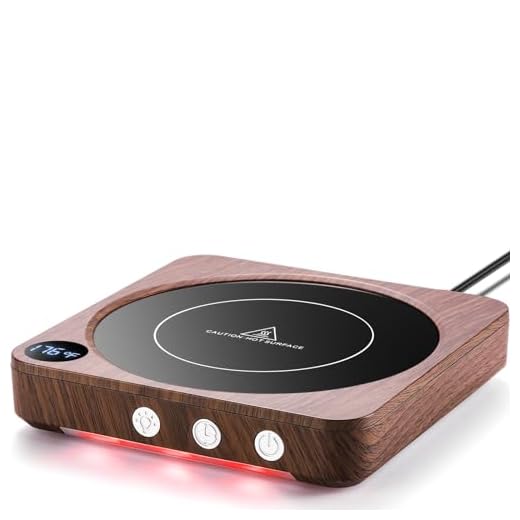
Short and sweet: article convinced me to stop reheating in the microwave. Bought the Wood-Style Smart Coffee Mug Warmer with Display and the 70oz Insulated Stainless Steel Coffee Carafe. Best money I’ve spent this month.
How’s the display? I worry it’ll be too bright at night.
Nice — glad to hear it! The wood-style warmer is one of our favorite aesthetics + function picks.
Candle warmers vs electric warmers debate: I’m team candle for ambience, team electric for practicality. Candle warmers look nicer in photos, electric warmers keep my Earl Grey at the right temp while I Reddit. 😂
Also: whoever recommended the 70oz Insulated Stainless Steel Coffee Carafe for long meetings — you are a hero. Keeps tea hot for hours and no one has to play kettle DJ in the office.
Pro tip: if you’re using a candle warmer under a teapot, lift the pot occasionally so it doesn’t develop a hotspot on the bottom. Learned that the hard way 😉
If you want ambience + practicality, try a dimmable candle warmer lamp with timer — you get mood lighting and controlled warmth.
Love the honesty. Ambience wins hearts, electricity wins deadlines. The carafe tip is especially handy for shared spaces — glad it worked for you.
Yes to the carafe. I pour into my favorite mug and it stays hot for the whole morning. Less fuss, more tea.
Candle warmers do make my living room look like a cozy indie film. But I wake up to a cold cup too often — compromise is a smart warmer on timer.
Love this — finally an article that treats tea warmers like actual life-savers. I use a dimmable candle warmer lamp with timer for my evening chamomile and it’s perfect: low light, no buzzing, and I can actually sip without reheating.
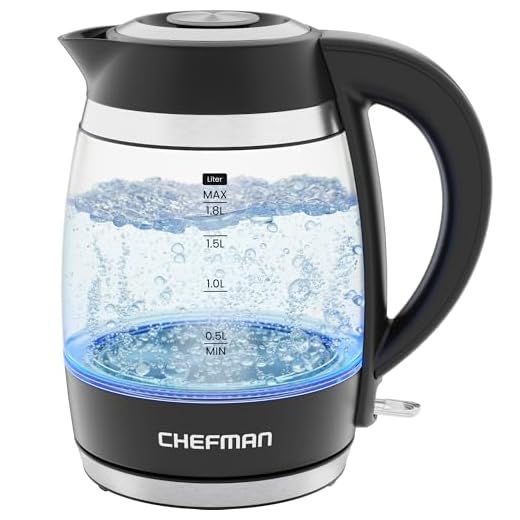
I also switched to the Glass Electric Kettle with No Plastic after reading the kettle section — the flavor is cleaner. Tips like “match warmer to your ritual” are spot on. Would love a quick comparison chart though (electric vs candle vs plate) next time!
Totally agree about the glass kettle. I thought it was marketing hype but it actually tastes less plasticky. Also the timer feature on the lamp = game changer.
Thanks, Emily — glad the lamp tip helped! A comparison chart is a great idea; we’ll try to add a simple pros/cons table in a follow-up post.
Have you tried the Wood-Style Smart Coffee Mug Warmer with Display? I alternate between that and a candle warmer depending on my mood. Display is handy for temps.
I appreciate the “Common Mistakes and How to Fix Them” section — so many people think hotter = better and over-brew. A couple things I do: preheat the mug with hot water, steep at the right temp (green tea ≈ 175°F), and use the Fast Heating Electric Coffee Cup Warmer if I’m sitting at my desk.
One tiny nit: the article barely mentioned water quality — filtered vs tap matters. Also, minor typo in the Brew and Keep section (s/it’s/its/). But overall solid guide. 👍
Filtered water = game changer, especially for delicate teas. My green tea tastes totally different using filtered water vs city tap.
Thanks for the eagle eye, Daniel — we’ll fix that typo and consider adding a short water-quality blurb. Preheating mugs is an underrated trick!
Also +1 on not over-brewing. I set a timer for each tea type and it’s saved my afternoon so many times.
Appreciate the feedback. We’ll add water quality and the preheat tip to the Brew and Keep section in the next edit.
Care & Safety section was super useful — I had no idea candle warmers could get that hot around the edges. Quick Q: how often should you descale an electric kettle like the 1.8L Borosilicate Glass Electric Kettle 1500W? Also any non-acidic cleaning hacks? I’m paranoid about ruining the glass finish.
Good question, Sophia. We recommend descaling every 1–3 months depending on your water hardness. Vinegar or citric acid are the usual acid-based solutions; for non-acidic options, you can use a commercial descaler formulated for glass kettles or try a baking soda paste for surface stains, but avoid scouring pads.
I live in a hard water area and do vinegar every 6 weeks. Rinse really well afterward — no funky taste. 😊
If you want zero smell, dilute a little hydrogen peroxide with water and rinse — worked for me after stubborn stains. But test a small area first.
Also: always follow the kettle manufacturer’s instructions when available, since some glass kettles have coating or electrical considerations.